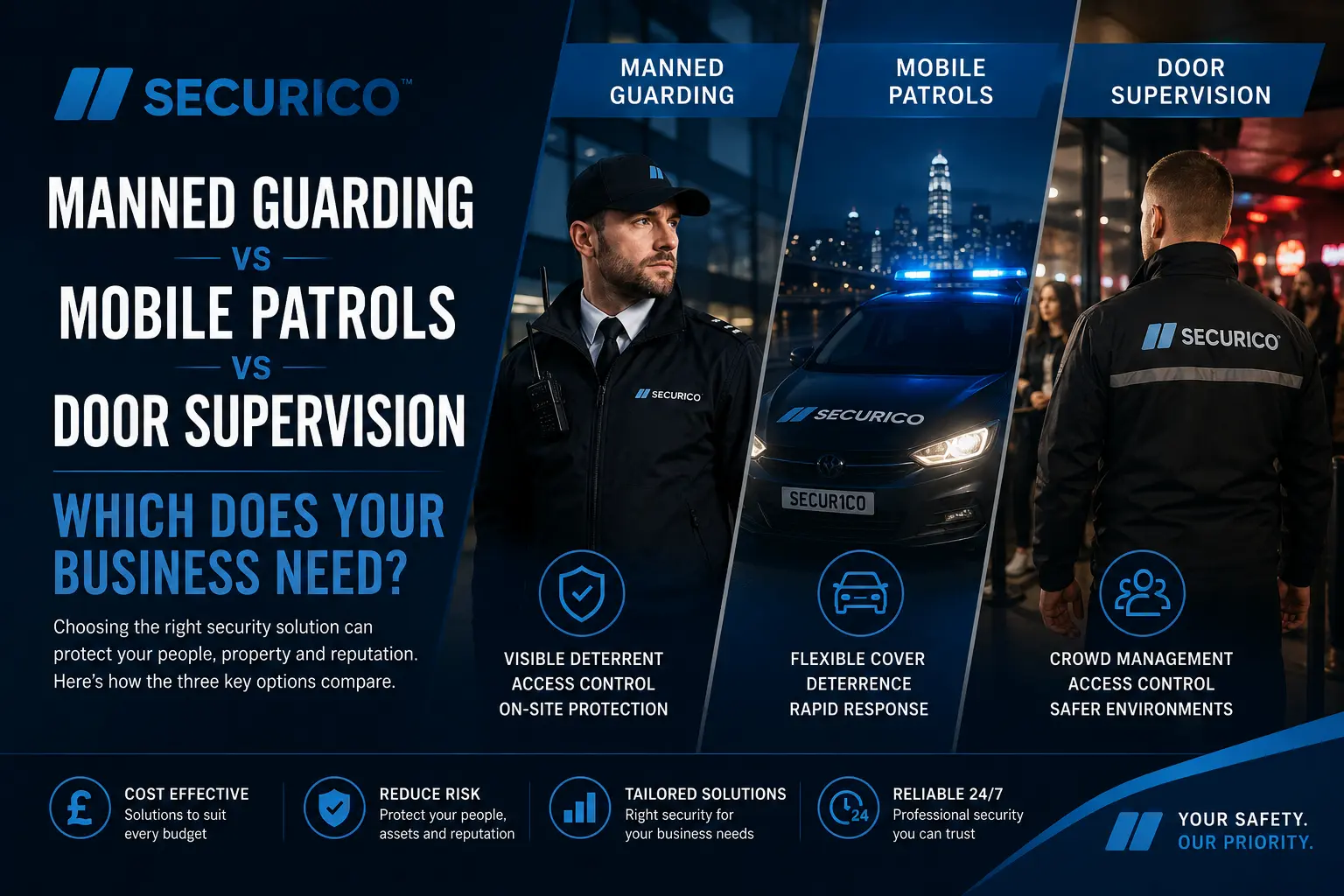
Manned guarding puts an officer on your site full-time; mobile patrols visit on a schedule; door supervision manages access and conflict at venues. The right choice comes down to your site, your risk and your budget — and many businesses use a combination. Here is how each service works and when to use it.
The main types of security service
UK security providers offer several distinct services. Choosing well means matching the service to the actual risk on your site rather than defaulting to a full-time guard you may not need.
Manned guarding (static security)
A dedicated SIA-licensed officer physically stationed at your premises — reception, gatehouse, retail floor or construction site. They deter intruders, control access, monitor CCTV and respond to incidents on the spot.
Best for: sites needing a constant, visible presence — construction, corporate reception, retail, or anywhere with high footfall or valuable assets.
Mobile patrols
Rather than staying put, an officer visits one or more sites on a planned or randomised schedule, checking the premises, locking up and logging each visit. It is far more cost-effective than a permanent guard for premises that only need periodic checks.
Best for: vacant properties, industrial estates, car parks and multi-site portfolios where a full-time presence would be overkill.
Door supervision
SIA door-supervisor-licensed officers manage entry, check IDs, handle capacity and defuse conflict at licensed and public venues. The role carries extra training in conflict management and licensing law.
Best for: bars, clubs, events, festivals and any venue serving alcohol or managing large crowds.
Key holding and alarm response
You hand a provider a set of keys and the responsibility for responding to out-of-hours alarms, so your staff never attend a callout alone at night. The provider attends, checks the site and secures it — for a small retainer plus a per-response charge.
Best for: any business that wants alarm cover without the cost of a permanent guard, or without putting employees at risk.
How to choose the right service
Work backwards from the risk, not the budget:
- Does the site need a constant presence, or just regular checks? Constant means manned guarding; periodic means mobile patrols.
- Are you managing crowds or licensed premises? That points to door supervision.
- Is the main risk out-of-hours alarms? Key holding and alarm response.
- What is your budget? Patrols and key holding cover more sites for less than full-time guarding.
For typical pricing on each, see our guide to what security guards cost in the UK.
Can you combine services?
Yes — most effective security programmes mix them. A retail group might use static guards at flagship stores, mobile patrols for smaller branches and key holding across the estate. A good provider designs the blend around your sites rather than selling you the most expensive option. If you are weighing up providers, our guide on how to choose the right security company covers what to look for.
Frequently asked questions
What is the difference between manned guarding and mobile patrols?
Manned guarding stations an officer at your site full-time; mobile patrols send an officer to visit on a schedule. Guarding suits constant-risk sites; patrols suit premises needing periodic checks at lower cost.
Do I need SIA-licensed officers for all of these?
Yes. Front-line manned guarding, mobile patrols and door supervision all require the relevant SIA licence under UK law.
Which security service is the most cost-effective?
For sites that do not need a constant presence, mobile patrols and key holding cover more ground for less than full-time manned guarding.
Need SIA-licensed security in the UK?
SECURICO delivers manned guarding, mobile patrols, door supervision and key holding nationwide. Get a tailored quote in minutes.
Get a Free Quote